
Shedding Light on Light Therapy
- Mar 15
- 8 min read
UV, infrared, and chromotherapy — what the research says, what people experience, and what to know before you try any of it.
A note before we begin: I am a curious writer, not a doctor or health professional. Everything here is for informational purposes only. Please consult a qualified healthcare provider before starting any new therapeutic practice.
Light is arguably the most ancient medicine on earth. Long before tanning beds and LED panels, ancient Egyptians practiced heliotherapy — deliberate sun bathing for healing. Ancient Indian, Greek, and Chinese traditions all recognized the relationship between light and human wellbeing. Today, that intuition has fractured into a diverse landscape of formalized therapies, each working with a different slice of the electromagnetic spectrum.
In the past decade, light therapy has moved from niche clinics into living rooms, wellness spas, and beauty routines. You'll find infrared panels in gym recovery rooms, chromotherapy color wheels in saunas, and UV lamps on the desks of people managing winter depression. The question worth asking isn't just "does it work" — it's: which type, for what, and at what cost or risk?

UV Light Therapy: The Double-Edged Wavelength
Ultraviolet light is the part of sunlight responsible for both its gifts and its dangers. It's the wavelength that drives vitamin D synthesis, helps regulate the immune system, and in controlled doses has been used medically for decades. It's also, of course, the wavelength most associated with sunburn, premature aging, and skin cancer risk.
In clinical settings, UV therapy (called phototherapy or PUVA) is a legitimate, dermatologist-supervised treatment for conditions like psoriasis, eczema, vitiligo, and certain cutaneous lymphomas. These treatments use carefully measured doses of UVA or UVB, usually in a medical office with calibrated equipment.
A separate use of UV light — one more relevant to the average wellness consumer — involves light boxes for Seasonal Affective Disorder (SAD). This is where things get nuanced. The Mayo Clinic notes that light boxes designed for SAD treatment should be UV-free or filter out most UV light — because the therapeutic benefit for mood actually comes from visible bright light stimulating the retina, not from UV exposure. Using a UV lamp for SAD can carry eye damage risks if done incorrectly.
According to Harvard Health, for both seasonal and nonseasonal depression, the effectiveness of light therapy is approximately the same as antidepressant medications — a striking claim that underscores why this area deserves serious attention.
"Special receptors in the retina transmit information about light to the superchiasmatic nucleus — the body's master clock — deep in the brain, regulating not just sleep and wake cycles but also digestion, hormonal activity, and other important bodily functions." — Harvard Health, 2022
For mood regulation, the key mechanism isn't UV at all — it's the brightness and timing of visible light exposure. Light therapy lamps should ideally be 10,000 lux and UV-free, according to Ohio State Medical Center. That said, some older research does suggest UV wavelengths may have a differential effect on certain depressive symptoms, though the findings are mixed and the research small-scale.


Infrared & Red Light Therapy: The Cellular Energizer
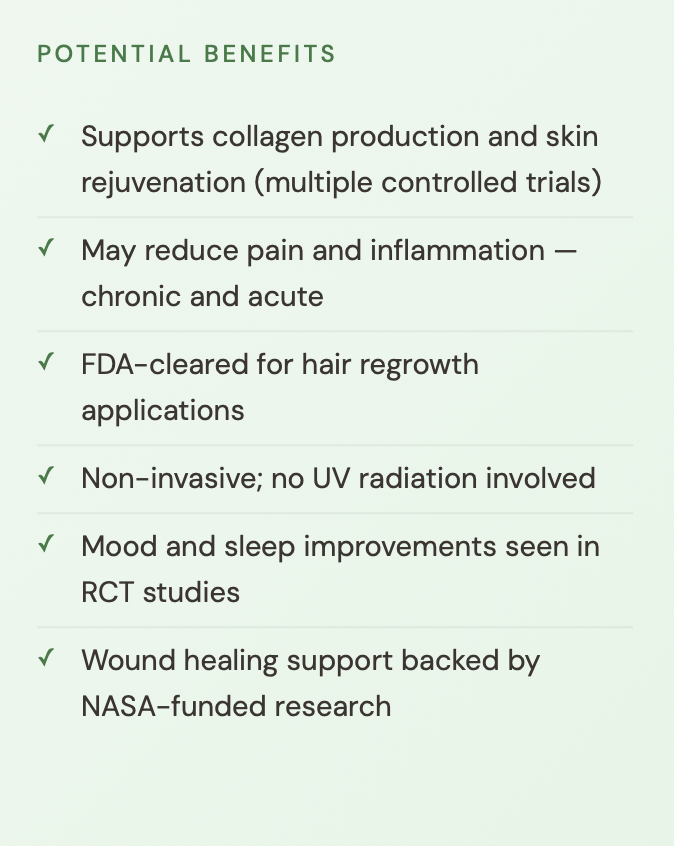
This is probably the modality generating the most buzz in wellness circles right now — and for good reason, given the growing body of research behind it. Red and near-infrared (NIR) light therapy falls under the scientific umbrella of photobiomodulation (PBM), a term that describes how light in specific wavelengths interacts with cells to produce biological effects.
The mechanism proposed goes like this: red light therapy works by increasing the production of mitochondria — your cells' energy sources — which may improve cell function and repair. More specifically, the light is absorbed by cellular components called chromophores, sparking a cascade that boosts production of ATP (adenosine triphosphate), the primary fuel every cell runs on. With more cellular energy available, the theory is that tissue repair, collagen production, and anti-inflammatory processes all get a lift.
Notably, the idea of photobiomodulation was first explored by Hungarian physician Endre Mester in 1967, who discovered an unexpected acceleration of hair regeneration while studying laser light effects in a mouse model. From that somewhat accidental beginning, the field has expanded enormously.
A 2024 comprehensive review published in the International Journal of Molecular Sciencesfound that PBM has demonstrated results in the management of non-healing wounds, scars, ulcers, musculoskeletal disorders, persistent pain, and immunological regulation. A controlled clinical trial showed that volunteers who completed red/NIR light treatments saw significant improvements in skin complexion, skin smoothness, and measurable increases in collagen density. UCLA Health reports that the FDA has cleared several at-home red light devices for hair regrowth, and studies focused on hereditary hair loss show that repeated treatments can increase hair thickness and length.
For people seeking relaxation and mood support, a double-blind, randomized, placebo-controlled study published in PMC found that near-infrared light exposure at therapeutic doses showed consistent positive benefits on well-being, specifically improving mood, reducing drowsiness, and supporting sleep quality. That's a methodologically solid finding — double-blind RCTs are the gold standard in research.
One encouraging safety note from UCLA Health: no research has suggested that red light can cause cancer — unlike UV light. Devices labeled 'FDA cleared' pose a low risk to the public.
Chromotherapy: The Color of Healing
Chromotherapy — also called color light therapy — is perhaps the most ancient and the most debated of the three modalities. Its roots stretch back thousands of years across Egyptian, Indian Ayurvedic, Chinese, and Greek healing traditions, all of which associated specific colors with health, balance, and energy. Today, you'll find chromotherapy panels built into infrared saunas, float tanks, and spa treatment rooms.
The basic premise: different wavelengths (colors) of visible light may influence the body and mind in distinct ways. Blue light targets acne-causing bacteria. Red light (which we already covered above) supports tissue repair. Green and yellow are associated with calming and stress relief. Violet and purple with spiritual and cognitive effects.
Some of these color-specific claims have genuine scientific underpinning. The clearest example? In the 1950s and 60s, numerous studies found blue light to be effective — and potentially less harmful than traditional treatments — for jaundice in premature newborns. Blue light phototherapy for neonatal jaundice is now standard clinical practice. That's a hard, evidence-backed application of chromotherapy principles.
The acne application is similarly supported: blue light therapy works differently than red light — it activates the destruction of acne-causing bacteria and oil-producing glands, making it a recognized tool in dermatological practice.
Where it gets murkier is in the broader wellness claims — that orange light boosts creativity, green promotes calm, or violet enhances spiritual clarity. These are psychologically plausible (color psychology is a real field), but the clinical evidence is thinner and less rigorous. A 2005 paper published through the NIH titled "A Critical Analysis of Chromotherapy and Its Scientific Evolution" acknowledged both the psychological effects of color and their limitations as a standalone medical treatment.
That said, the experiential reports from people who use chromotherapy — especially in conjunction with saunas or meditation — tend to be strongly positive. Relaxation, mood uplift, and a sense of mental clarity are commonly cited. Whether these are direct physiological effects of the colored light or the result of a deeply relaxing ritual is an open question — and not necessarily an important one for someone seeking stress relief.


What People Actually Say They Get From It
Beyond the clinical literature, there's a whole ecosystem of personal experience worth acknowledging. People who incorporate light therapy into their routines — whether it's a daily 20 minutes in front of a SAD lamp, weekly red light panel sessions at a recovery studio, or chromotherapy in an infrared sauna — frequently report some common themes:
Relaxation and nervous system settling
This is probably the most universal report across all three types. Whether it's the ritual, the light itself, the warmth (in sauna contexts), or a combination, people consistently describe feeling calmer and more grounded.
Better sleep
Both UV-based bright light therapy (used in the morning) and near-infrared therapy have been associated with improved circadian rhythm regulation. Many users report falling asleep more easily and waking feeling more rested.
Skin improvements
This is where the red light user community is particularly vocal — reporting softer skin texture, reduced fine lines, and less redness over weeks or months of regular use. The research backs this up reasonably well.
Mood and energy lift
SAD lamp users often describe a noticeable improvement in winter mood within days of starting use. Some infrared and chromotherapy users report feeling energized or mentally clearer after sessions.
Pain relief
Athletes and people managing chronic conditions often cite red and near-infrared therapy for muscle recovery, joint discomfort, and inflammation — consistent with what the photobiomodulation research suggests about reduced inflammatory markers.
A Quick Comparison
These three modalities aren't really competing — they operate on different wavelengths and serve different purposes. Here's a simplified way to think about them:
UV therapy is best understood as a medical tool. It has legitimate clinical applications for skin conditions and mood disorders, but requires professional guidance, carries real risks with overexposure, and should not be approached casually. For SAD specifically, the most effective and safest approach is visible bright light — not UV.
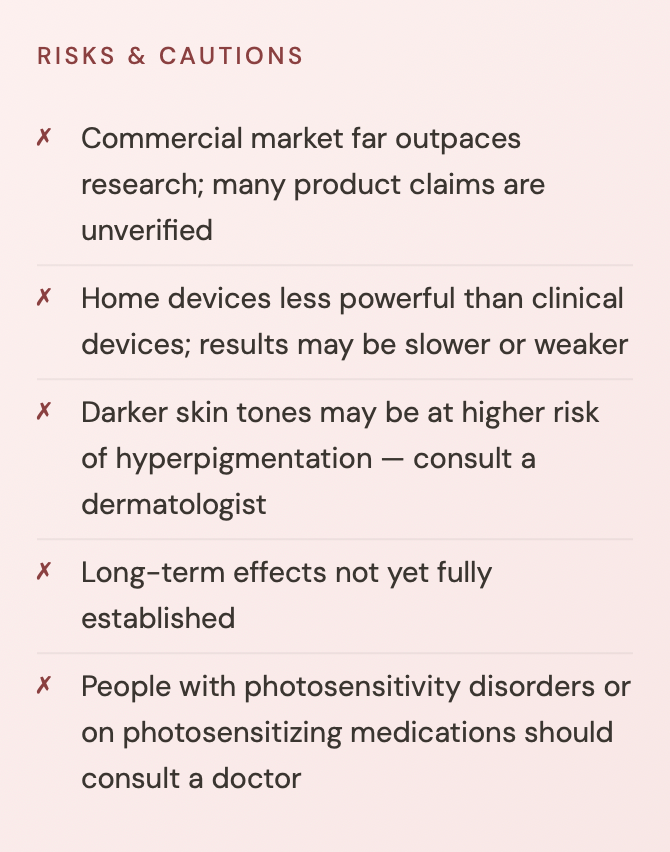
Infrared/red light therapy has the strongest and most rapidly growing body of scientific research behind it. For skin health, hair regrowth, muscle recovery, pain management, and general cellular support, the evidence is meaningful — though not yet complete. It's arguably the most accessible modality for home use, with FDA-cleared devices available. Manage expectations, buy quality devices, and consult a dermatologist if you have darker skin or photosensitivity concerns.
Chromotherapy sits somewhere between science and wellness ritual. Specific color applications (blue light for acne, bright white light for SAD) have strong backing. The broader color-wellness framework is supported by psychology more than biology. It's generally very safe, often profoundly relaxing, and a meaningful addition to a holistic self-care practice — just don't use it as a stand-in for actual medical care.
A Final (and Very Important) Note from Me
I want to be direct: I researched this post as a curious person interested in wellness, not as a medical professional, scientist, or certified health practitioner. Everything here is drawn from publicly available sources — academic journals, hospital health portals, and medical foundations — which I've linked throughout and below.
Light therapy is a legitimate and fascinating area of health research. But "legitimate" doesn't mean "one-size-fits-all." Your health history, skin type, medications, and specific concerns all matter. Before adding any therapeutic modality to your routine — light-based or otherwise — please speak with a qualified healthcare provider who knows your situation.
That said: there's something deeply human about our relationship with light. We've been chasing its healing properties for thousands of years. The science is finally starting to catch up — and that, to me, is genuinely exciting.
Sources
Avci P, et al. "A Controlled Trial to Determine the Efficacy of Red and Near-Infrared Light Treatment." PMC / NCBI.pmc.ncbi.nlm.nih.gov
Fernández-Guarino M, et al. "Unlocking the Power of Light on the Skin: A Comprehensive Review on Photobiomodulation." Int. J. Mol. Sci. 2024. mdpi.com
UCLA Health. "5 Health Benefits of Red Light Therapy." 2025. uclahealth.org
WebMD / Sheikh Z, MD. "Red Light Therapy: Effectiveness, Treatment, and Risks." 2024. webmd.com
Hamblin MR. "Photobiomodulation: The Clinical Applications of Low-Level Light Therapy." PubMed. 2021. pubmed.ncbi.nlm.nih.gov
Tähkämö L, et al. "Effects of Near-Infrared Light on Well-Being and Health — A Double-Blind, Randomized, Placebo-Controlled Study." PMC. pmc.ncbi.nlm.nih.gov
Mayo Clinic. "Seasonal Affective Disorder Treatment: Choosing a Light Box." mayoclinic.org
Harvard Health Publishing. "Light Therapy: Not Just for Seasonal Depression?" 2022. health.harvard.edu
Ohio State Health. "Does Light Therapy Help Seasonal Affective Disorder?" 2023. health.osu.edu
The Skin Cancer Foundation. "Spotlight on Seasonal Depression: Why Indoor Tanning Isn't an Effective Treatment." 2022. skincancer.org
Azeemi ST & Raza M. "A Critical Analysis of Chromotherapy and Its Scientific Evolution." Evidence-Based Complementary and Alternative Medicine. 2005. (Via NIH/NCBI)
Move It Studio. "What Is Chromotherapy? Health Benefits of Infrared Sauna." 2024. moveitstudio.com


Comments